How to Become a Certified Medical Assistant in Dallas
How to Become a Certified Medical Assistant in Dallas
Becoming a certified medical assistant in Dallas takes 18 weeks: you complete a training program, finish an 80-hour clinical externship, and pass the NHA Certified Clinical Medical Assistant (CCMA) exam. Certified medical assistant classes at Dallas Medical Assistant School are built around that sequence, with online coursework during the week and one 4.5-hour Saturday lab inside a working medical office.
According to the U.S. Bureau of Labor Statistics, the median annual wage for medical assistants was $44,200 in May 2024, with employment projected to grow 12 percent through 2034 — much faster than the average for all occupations (Bureau of Labor Statistics, Occupational Outlook Handbook, 2025).
Most guides tell you what certification is. This one walks the calendar: what happens in each stretch of the 18 weeks, and where the real decision points are.
Key Takeaways
- The full path in Dallas runs 18 weeks, plus the few weeks you take to schedule and sit for the CCMA exam.
- Week 8 is the gate: that is when students become eligible to start their 80-hour externship.
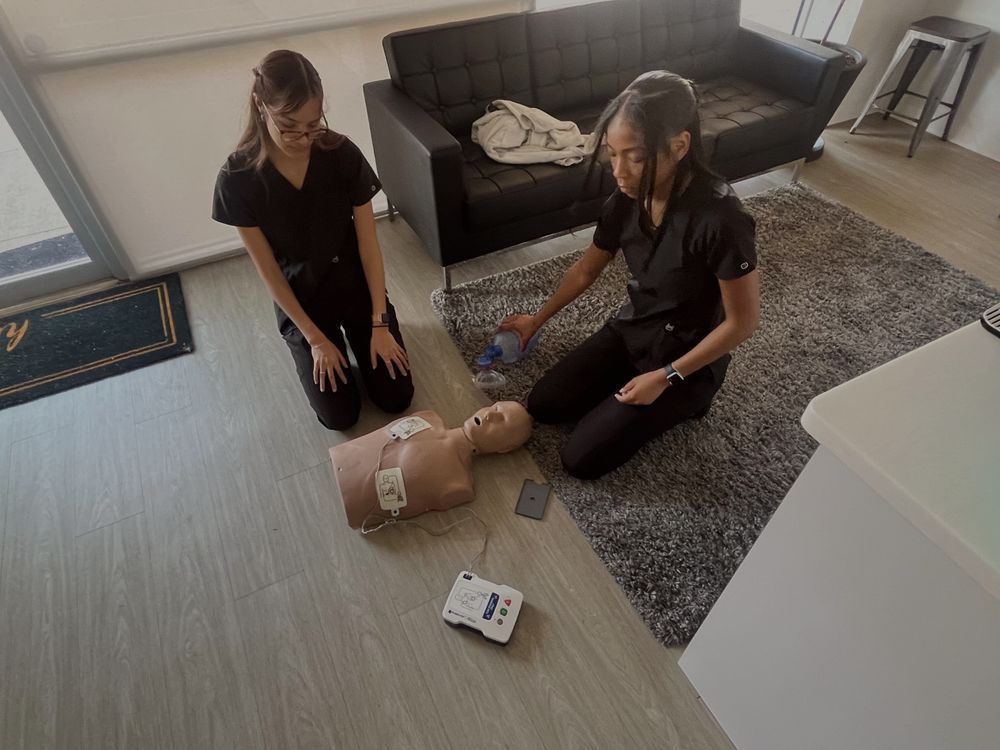
- Saturdays are the hands-on component, 4.5 hours in a real medical office rather than a campus classroom.
- Six campuses across DFW means your externship placement is near where you already live.
Weeks 1 Through 8: Coursework During the Week, Skills on Saturday
The first stretch is where the rhythm gets set. Coursework is online and you work through it on your own time, which for most students means weeknights after a shift. Saturday is the fixed commitment: 4.5 hours of hands-on practice at one of the Dallas Medical Assistant School campuses.
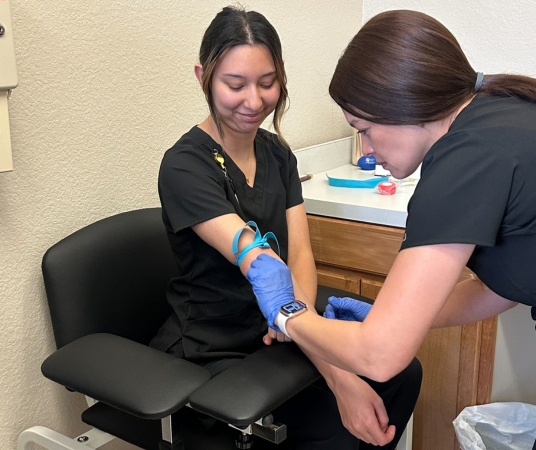
Those Saturdays are where the skills get built:
- Vital signs: blood pressure, pulse, respirations, temperature
- Venipuncture and capillary draws, including order of draw
- Electrocardiograms, from lead placement to spotting a bad tracing
- Injections and medication administration under supervision
- Urinalysis, rapid strep, and blood glucose testing
- Infection control, sterile technique, and wound care
- Patient intake and electronic health record charting
The reason it is 4.5 hours and not a 50-minute class period is repetition. You do not learn venipuncture by watching one demonstration. You learn it on the twentieth stick.
Marisol spent six years in retail management in Oak Cliff and had never touched a needle. By week six she had stopped flinching before a draw, and by week nine she was doing them on live patients.
Week 8: The Externship Gate
Week 8 is the marker worth planning around. Students become eligible to begin the 80-hour externship then, once they have enough lab hours behind them to be useful in a clinic rather than a bystander in one.
This is the point where your schedule changes shape. The externship happens on weekdays in a working medical office, so students who are employed full time usually start arranging coverage or shifting hours around week 6. Waiting until week 8 to have that conversation with an employer is cutting it close.
Placements land in the practice types that make up most of DFW outpatient care: family medicine, pediatrics, urgent care, and internal medicine. A pediatric clinic in Denton runs at a different tempo than an urgent care off LBJ Freeway, and this is where most students find out which one suits them.
Weeks 9 Through 18: Externship Hours and Exam Domains in Parallel
The back half runs two tracks at once. You are logging externship hours in a clinic while coursework shifts toward the CCMA exam domains: foundational knowledge, anatomy and physiology, clinical patient care, patient care coordination, administrative assisting, communication, and medical law and ethics.
Clinical patient care is the largest section of the exam, which is the argument for lab hours over lecture hours. The content you practiced on Saturdays is the content the test weights most heavily.
Kenneth drove for a delivery company in Irving and wanted weekday hours he could plan around his kids. He externed at an internal medicine practice ten minutes from his campus and was hired there full time after passing his CCMA exam.
After Week 18: Sitting for the NHA Exam
The National Healthcareer Association administers the CCMA exam. Eligibility requires a high school diploma or GED plus completion of an MA training program within the last five years, or documented work experience in the field.
Schedule it while the material is fresh. The students who drift for three months after graduation are the ones who end up re-reviewing everything from scratch.
Pass it and you hold three things: the CCMA certificate, a certificate of completion from the program, and a BLS (CPR) card. Those three cover the credential line on most Dallas job postings.
Does Texas Actually Require Certification?
No. Texas does not license or register medical assistants, and no state law requires the credential. The requirement comes from employers, not the state, and in Dallas it is close to universal on clinical MA postings.
Scope of practice varies by state, and Texas physicians delegate clinical tasks under their own authority. Verify any specific task question with the Texas Medical Board.
Choosing a Campus When You Live in DFW
Six campuses run this program: Grapevine, Addison, Arlington, Denton, Irving, and McKinney. Since your Saturday lab is the only fixed in-person commitment for the first eight weeks, pick for the commute you can sustain on a weekend morning for 18 straight weeks.
Campus choice also shapes your externship geography. Students placed near their campus spend less of the 80 hours in traffic, which matters more than it sounds when you are fitting clinic hours around a job.
What the 18 Weeks Cost
Tuition is $4,490. You can pay in full before your start date, or use a payment plan: $1,950 down with weekly auto-drafted payments of $157.78 over 18 weeks, or $950 down with weekly payments of $213.33. Current tuition and payment terms are posted on the tuition page.
Tuition Savings may be available depending on your start date; ask admissions what applies to yours. The application steps are outlined on the how to apply page.
Frequently Asked Questions
What actually happens during a Saturday lab?
Saturday labs run 4.5 hours inside a working medical office rather than a campus classroom. Students rotate through hands-on stations practicing the week’s clinical skills on real equipment, with an instructor correcting technique in the moment. It is the practical half of the program, paired with the online coursework you complete during the week.
When can I start my externship?
Students become eligible to begin the 80-hour externship after week 8 of the 18-week program. The eight weeks of prior lab work exist so you arrive at the clinic able to contribute. Externship hours are completed on weekdays in a real medical office, so plan any work-schedule adjustments a couple of weeks ahead.
Can I keep working full time during the program?
Most students do through the first eight weeks, since coursework is online and labs are Saturdays. The externship phase is the harder part, because those 80 hours happen during clinic business hours. Students typically negotiate shifted hours or reduced days with an employer rather than leaving a job outright.
How soon should I take the CCMA exam after finishing?
Sooner is better. Exam content maps to what you practiced during the program, and recall fades. Students who schedule within a few weeks of completing the program are working from material they just used in a clinic. There is no benefit to waiting, and the delay generally means re-studying content you already knew.
Which Dallas-area campus should I pick?
Choose by commute. Grapevine, Addison, Arlington, Denton, Irving, and McKinney all run the same program, so the deciding factor is which Saturday drive you can sustain for 18 weeks. Campus location also tends to shape where your externship gets placed, which affects your weekday driving during the second half.
Getting Started in Dallas
The path is a calendar more than a checklist: eight weeks of coursework and Saturday labs, an externship that opens at week 8, and a CCMA exam once the 18 weeks are done. Knowing where the gate sits is what lets you plan work and family around it instead of scrambling at week 7.
Ready to start your medical assistant career in Dallas? Explore the Dallas Medical Assistant School program and take the first step today.
You're only a few months from the medical assistant career you deserve.