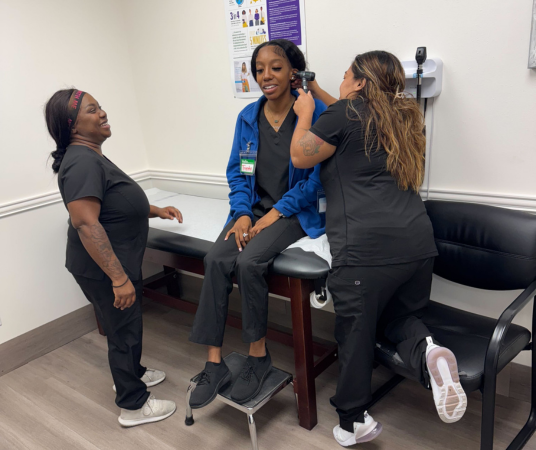
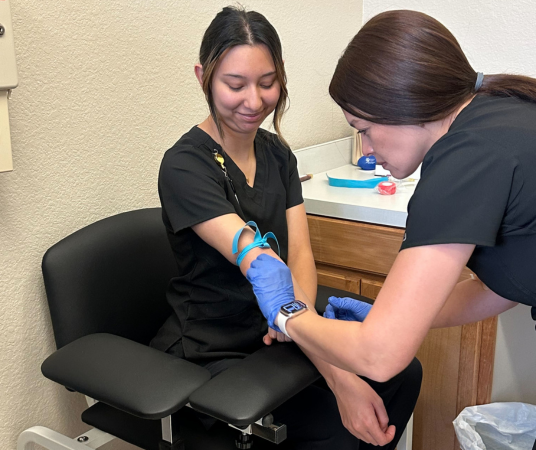
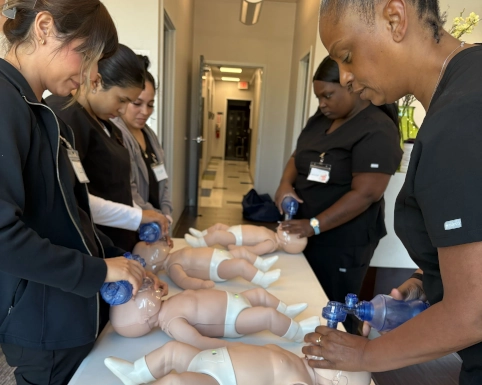
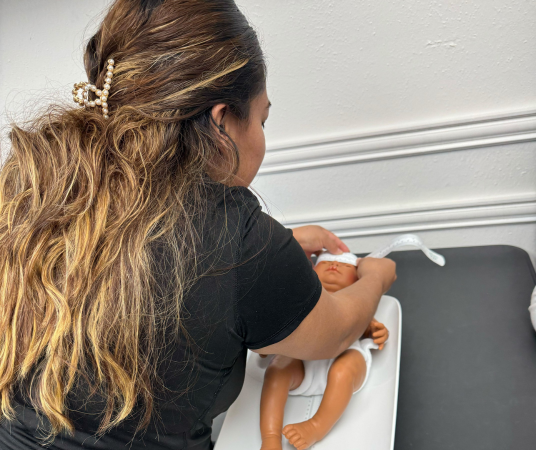
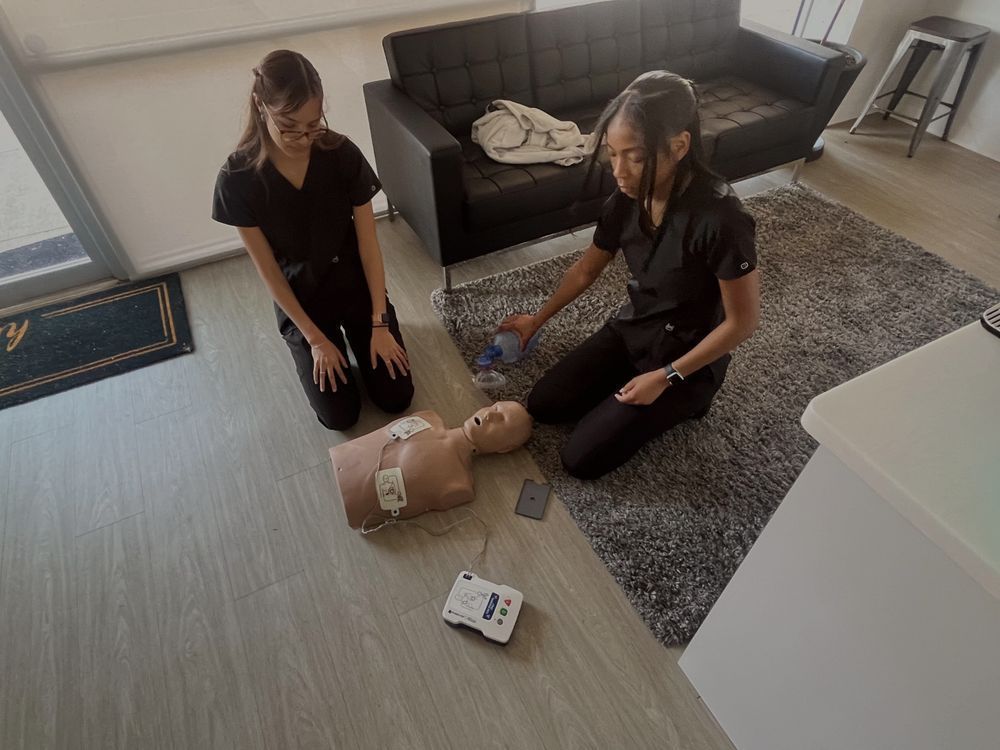
The word “certified” in front of “medical assistant” isn’t just a title — it’s a pay raise. Certified medical assistants (CCMA, CMA, or RMA) earn $2,000–$6,000 more per year than non-certified peers, get hired faster, and have access to more positions. The certification tells every employer that your skills have been independently verified through a standardized exam.
Here’s what certified medical assistant classes cover, how certification works, and what it means for your career in Dallas.
What “Certified” Means
Medical assistant certification is a credential issued by a national organization after you pass a standardized exam. The three main certifications:
| Credential |
Organization |
Exam Focus |
| CCMA |
National Healthcareer Association (NHA) |
Clinical + administrative |
| CMA |
American Association of Medical Assistants (AAMA) |
Clinical + administrative |
| RMA |
American Medical Technologists (AMT) |
Clinical + administrative |
All three are nationally recognized. The CCMA is the most commonly pursued by graduates of focused training programs because NHA eligibility requirements align with career-specific curricula.
What CCMA-Focused Classes Cover
Certified medical assistant classes prepare you for both the job and the exam simultaneously. The CCMA exam tests knowledge across these domains:
Clinical Content
- Vital signs measurement and documentation
- Phlebotomy — venipuncture, specimen handling, order of draw
- Injections — IM, SubQ, intradermal administration
- EKG — electrode placement, operation, artifact recognition
- Point-of-care testing — urinalysis, glucose, rapid tests
- Infection control — sterilization, PPE, OSHA compliance
- Patient preparation and positioning
- Wound care and clinical procedures
- Medication administration fundamentals
Administrative Content
- Medical terminology and anatomy/physiology
- EHR documentation and navigation
- Scheduling, patient flow, and front-office operations
- Insurance verification and billing procedures
- HIPAA compliance and patient privacy
- Professional communication and ethics
Exam Preparation
Quality programs don’t save exam prep for the final week. At Dallas Medical Assistant School, CCMA content is integrated throughout all 18 weeks:
- Each module maps to specific CCMA exam domains
- Practice questions reinforce content after each topic
- Full-length practice exams simulate test conditions
- Test-taking strategies and time management techniques
- Content review sessions before the exam
The Certification Pay Premium
According to BLS data and employer surveys:
| Metric |
Non-Certified MA |
Certified MA (CCMA) |
| Median hourly rate |
$18–$20/hr |
$20–$23/hr |
| Median annual salary |
$36,000–$40,000 |
$42,000–$48,000 |
| 5-year earnings premium |
— |
+$10,000–$30,000 |
The certification premium is consistent across markets, practice types, and experience levels. It persists throughout your career — not just at the entry level.
Why Employers Pay More for Certification
Reduced risk: The CCMA exam independently verifies clinical and administrative competency. Employers don’t have to guess whether you can draw blood or navigate an EHR — the credential confirms it.
Faster onboarding: Certified hires require less on-the-job training and contribute sooner.
Lower turnover: Certified MAs tend to be more committed to the profession and stay in positions longer.
Compliance: Some states and healthcare systems require or strongly prefer certification for clinical tasks.
The Program at Dallas Medical Assistant School
Length: 18 weeks
Schedule: Evenings and weekends
Training: Inside real medical offices
CCMA prep: Integrated throughout the curriculum
Externship: Supervised clinical experience in Dallas
Cost: Payment plans, no student loans. CCMA exam fee often included.
WIOA funding: Many programs are approved under the Workforce Innovation and Opportunity Act. Eligible students may qualify for workforce-funded training. Check CareerOneStop.org.
How to Get Certified: The Steps
- Complete certified medical assistant classes at an approved training program (like Dallas Medical Assistant School) — 18 weeks
- Schedule the CCMA exam within 2–4 weeks of graduation while material is fresh
- Pass the exam — multiple choice, administered at testing centers or via proctored online testing
- Add CCMA to your resume and reference it in every interview
- Maintain certification through continuing education (10 CE credits every 2 years for CCMA)
Career Outlook for Certified MAs
- Job growth: 14% through 2032 (Bright Outlook per O*NET)
- Settings: Primary care, specialty clinics, urgent care, hospital outpatient, FQHCs
- Advancement: Lead MA, clinical coordinator, specialty practice, office management
- Portability: CCMA is nationally recognized — it follows you if you relocate
Get Started