Medical Assistant Program in Dallas: How Students Fit It Around a Full-Time Job
Medical Assistant Program in Dallas: How Students Fit It Around a Full-Time Job
Yes, most students hold a job while completing a medical assistant program in Dallas — but the program is not equally demanding the whole way through. The first eight weeks ask for weeknight coursework and one Saturday. The externship phase asks for weekday hours in a clinic, and that is the part people need to plan for in advance.
This post is about logistics rather than curriculum. If you want the week-by-week academic path, that is covered in how to become a certified medical assistant in Dallas. What follows is the schedule question: what each phase actually costs you in hours, and where the pressure points are.
Key Takeaways
- Weeks 1 through 8 are the manageable stretch — online coursework on your own time plus one 4.5-hour Saturday lab.
- Week 8 is the planning marker: the 80-hour externship happens on weekdays, so schedule conversations should start around week 6.
- Six campuses across DFW means campus choice is mostly a commute decision, and it shapes externship geography too.
- Weekly payment plans are structured to run alongside the 18 weeks rather than as a lump sum up front.
The Shape of a Week During the First Eight
Coursework is online and self-paced within the week. In practice that means most students do it at night after a shift, or in blocks on a day off. There is no fixed weeknight you must be somewhere.
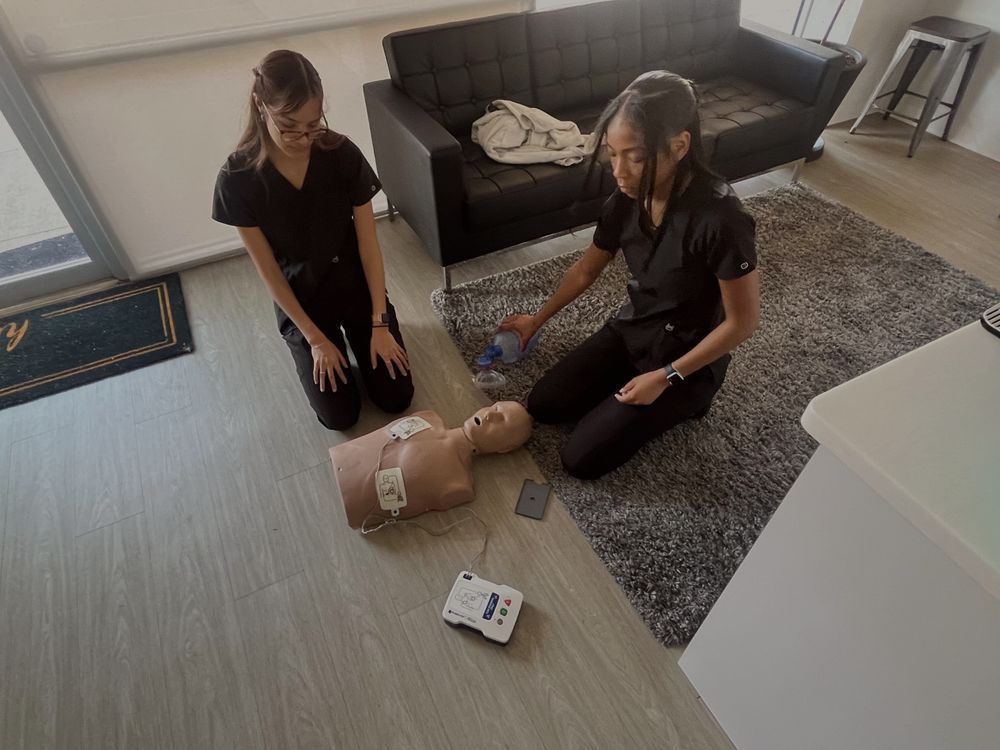
The fixed commitment is Saturday: 4.5 hours of hands-on practice at one of the Dallas Medical Assistant School campuses. That block is not a lecture. It is repetitions on vital signs, venipuncture and order of draw, EKG lead placement, injections, urinalysis and rapid tests, sterile technique and wound care, and charting in an electronic health record.
The honest budget for this stretch is your Saturday morning plus somewhere in the range of a few weeknight sessions. It is real work on top of a job, but it is predictable, which is what makes it survivable for 18 weeks.
Week 8 Is the Marker to Plan Around
Students become eligible to begin the 80-hour externship after week 8, once there are enough lab hours behind them to contribute in a clinic rather than observe one.
This is where the schedule changes shape, because externships happen during clinic business hours on weekdays. That is the single logistical hurdle in the program, and it is entirely predictable — which means it is solvable if you start early.
Students who are employed full time generally begin arranging coverage around week 6. Waiting until week 8 to raise it with an employer is cutting it close, and the students who struggle are almost always the ones who did not start the conversation early.
Having the Conversation With Your Employer
Most people do not leave a job for this. They restructure one.
The arrangements that tend to work in practice: shifting to four longer days, moving to evening or overnight shifts for a stretch, using accrued time off in blocks rather than single days, or temporarily dropping to part time for the externship weeks. Eighty hours spread across the back half of the program is roughly one weekday a week — a smaller ask than it sounds when framed that way.
It helps to bring specifics rather than a general request. A defined number of hours, a defined window, and an end date is a conversation most managers can say yes to.
Campus Choice Is Mostly a Commute Decision
Six campuses run this program: Grapevine, Addison, Arlington, Denton, Irving, and McKinney. All six run the same curriculum, so the deciding factor is which drive you can sustain on a weekend morning for 18 straight weeks.
Campus choice also tends to shape externship geography, since placements generally land near where you train. That affects your weekday driving during the second half of the program, when you are fitting clinic hours around work. A commute that is tolerable once a week on a quiet Saturday can be a different proposition on a weekday morning on I-35E.
Pick for the version of the drive you will be making in week 12, not week 1.
What the Online Portion Actually Asks of You
The self-paced part is where students most often underestimate the load, precisely because nothing forces the issue on a given night. Coursework covers the reading-heavy exam domains — anatomy and physiology, foundational knowledge, medical law and ethics, patient care coordination, administrative assisting, communication — and it accumulates if you let it.
The students who do well treat it as a standing appointment rather than something to fit into leftover time. Two or three fixed weeknight blocks, protected the same way a shift would be.
Paying for It Alongside a Paycheck
Tuition is $4,490. You can pay in full before your start date, or use a payment plan structured to run with the program rather than ahead of it: $1,950 down with weekly auto-drafted payments of $157.78 over 18 weeks, or $950 down with weekly payments of $213.33 over the same period.
The weekly cadence exists because it maps to how most students are actually paid. Current tuition and payment terms are posted on the tuition page. Tuition Savings may be available depending on your start date; ask admissions what applies to yours.
Priya was working split shifts at a hospital cafeteria in Irving when she started. She did coursework between shifts, kept her Saturdays for lab, and negotiated one weekday off for the externship stretch.
Frequently Asked Questions
Can I really keep working full time through the whole program?
Through the first eight weeks, most students do — coursework is online and the only fixed commitment is Saturday. The externship phase is the harder part, since those 80 hours happen during clinic hours. Most students adjust their schedule rather than leave a job.
What if I miss a Saturday lab?
Talk to your campus as early as you can. Saturdays are where the hands-on repetitions happen and they are difficult to make up informally, so the answer depends on timing and what the session covered. Plan around them the way you would a shift you cannot swap.
How many hours a week should I budget total?
Plan on the 4.5-hour Saturday lab plus enough weeknight time to stay current with coursework. From week 8 forward, add externship hours, which average out to roughly one weekday a week across the back half.
Do I need any healthcare experience to start?
No. No prior healthcare experience is required to enroll. Most of each cohort comes from other industries entirely.
Getting Started in Dallas
A medical assistant program in Dallas is manageable alongside a job, but only if you treat week 8 as a planning deadline rather than a surprise. Everything before it is predictable, and everything after it is solvable with a few weeks of notice.
Ready to start your medical assistant career in Dallas? Explore the Dallas Medical Assistant School program and take the first step today.
You're only a few months from the medical assistant career you deserve.