Medical Assistant Certification Requirements in Dallas, TX (2026)
To earn your medical assistant certification in Dallas, you need to meet three core requirements: complete a medical assistant training program, satisfy your certifying body’s eligibility rules, and pass a national certification exam — most often the NHA Certified Clinical Medical Assistant (CCMA). You do not need prior healthcare experience to begin. At Dallas Medical Assistant School, an 18-week hybrid program — live weekly online classes, monthly in-person lab days, and a hands-on externship — is built to help you meet all three.
Key Takeaways
- Three requirements: finish a training program, meet the exam’s eligibility rules, and pass a national exam (commonly the NHA CCMA).
- No prerequisites to start. You don’t need healthcare experience or a college degree to enroll.
- In Texas, certification is voluntary by law but expected by nearly all employers.
- Plan for about 18 weeks in a hybrid program combining online classes, monthly labs, and an externship.
Looking for the chronological version instead? See our step-by-step guide to becoming a certified medical assistant in Dallas. This page focuses on the requirements themselves.
What Are the Requirements to Get Certified?
Becoming a certified medical assistant isn’t a single hurdle — it’s a short checklist. First, you complete a medical assistant training program that teaches both clinical and administrative skills. Second, you meet the eligibility criteria set by your certifying organization (finishing an approved program is the most common pathway). Third, you pass the certification exam and receive your credential.
The reason the training program sits at the center of these requirements is that it satisfies two of the three at once: it delivers the instruction and hands-on hours you need, and completing it makes you eligible to sit for the exam. That’s why choosing a program built around a specific certification — rather than a general course — is the most efficient way to check every box. At Dallas Medical Assistant School, the curriculum, labs, and externship all map directly to the CCMA.
Education & Eligibility Requirements
The eligibility bar to begin is intentionally low. You do not need prior healthcare experience or a science background. To enroll at Dallas Medical Assistant School, you generally need to be at least 18 by the end of class and hold a high school diploma or GED.
To be eligible to sit for the CCMA exam, you complete an approved medical assistant program — the coursework and externship satisfy the exam’s education/experience pathway, so you’re not left assembling prerequisites on your own. This is a key requirement people miss: you can’t simply register for the national exam cold and expect to pass without the training behind it. Career-changers from retail, hospitality, or office work already bring the customer-service and multitasking instincts that translate well into a clinical setting.
Certification Exam Requirements: The CCMA
The credential most Dallas employers recognize is the NHA Certified Clinical Medical Assistant (CCMA). The exam is a computer-based test covering clinical patient care, phlebotomy and EKG basics, medication administration, medical office procedures, and patient communication.
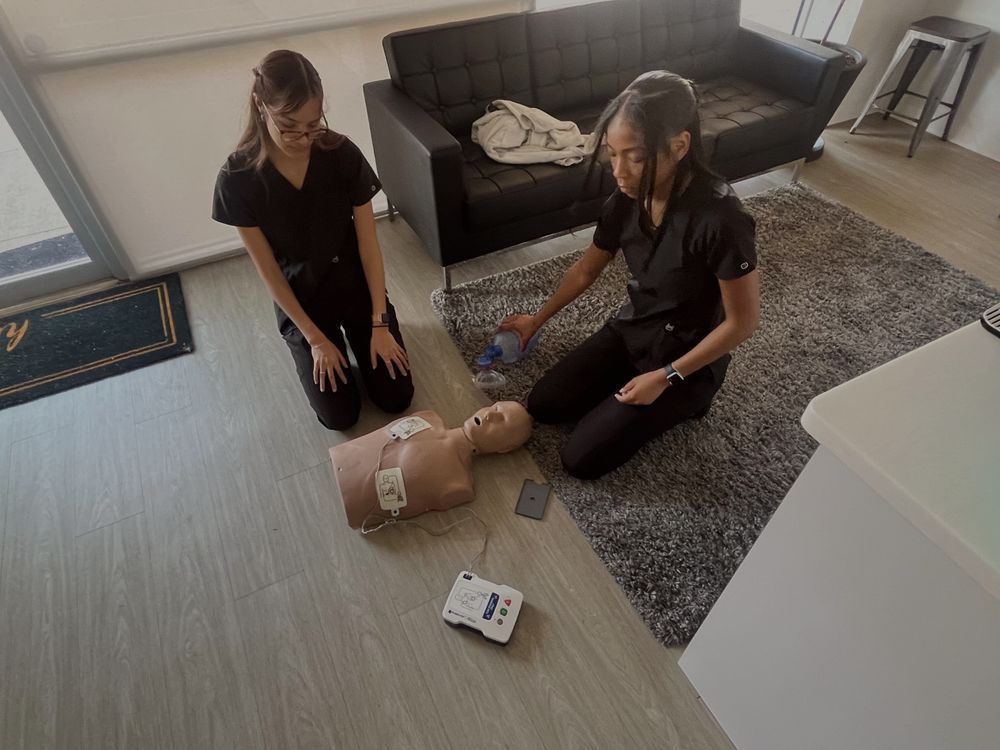
Meeting the exam requirement is less about last-minute studying and more about steady exam prep built into your program. Across your 18 weeks at Dallas Medical Assistant School, you’ll complete a CCMA baseline practice test, topic quizzes, and full-length practice exams, so you walk in knowing the format and pacing. Just as important, the monthly in-person labs mean the clinical portion isn’t abstract: you’ve physically drawn blood and taken vitals under an instructor’s eye, so exam questions describe procedures your hands have already performed.
Clinical Skill Requirements Employers Expect
Passing the exam proves you know the material; employers also want to see you can do the work. That’s the requirement the monthly in-person lab days are designed to meet. On lab day at Dallas Medical Assistant School, you practice the exact procedures a clinic will expect on day one:
- Vital signs and patient assessment — a focused history and a full set of vitals, done efficiently and accurately.
- Venipuncture (blood draws) — proper, safe technique and specimen handling.
- EKGs — placing leads correctly and producing a clean tracing.
- Injections and medication basics — safe preparation and administration technique.
- Documentation — accurate charting in the record, which employers scrutinize closely.
Consider a typical Dallas career-changer leaving a decade in restaurant management. The classroom theory lands, but it’s on lab day — drawing blood for the first time, feeling the vein “give” — that it clicks: I can actually do this. By externship, those reps become the demonstrated clinical skills a hiring manager is looking for.
Do You Legally Need Certification in Texas?
Here’s a requirement worth clarifying: in Texas, medical assistant certification is voluntary by law. The state does not license medical assistants the way it licenses nurses, so no statute forces you to be certified to hold the title.
In practice, though, certification functions as a requirement. Most Dallas clinics and hospital systems list a current national certification (CCMA or equivalent) as a must-have on their job postings, because it proves you’ve met a recognized national standard. Basic Life Support (BLS) certification is another common expectation — and graduates of our program receive a BLS certification card through the American Heart Association along with their certificate of completion. So while the state won’t require it, the job market effectively will.
Cost and Timeline Requirements in Dallas
The final piece of planning is time and money. At Dallas Medical Assistant School, the program runs about 18 weeks — far shorter than a two-year degree — and the hybrid schedule is built so you can keep working while you train. Weekly sessions are online; the required hands-on component happens on monthly in-person lab days plus a supervised externship in a real Dallas-area medical office.
For cost, tuition and current payment options load on the school’s Tuition page rather than in a blog post, since they can change. Flexible payment plans are available, and you can ask about any current Tuition Savings when you speak with the admissions team. Budget for the exam and any required materials as part of your total plan.
Medical Assistant Salary and Job Outlook in Texas
Meeting these requirements opens the door to a growing field.
According to the U.S. Bureau of Labor Statistics, the median annual wage for medical assistants was $44,200 in May 2024, with employment projected to grow 12 percent through 2034 — much faster than the average for all occupations (Bureau of Labor Statistics, Occupational Outlook Handbook, 2025).
Dallas–Fort Worth is one of the largest, fastest-growing healthcare markets in the country, so certified MAs here can choose from primary care, urgent care, specialty practices, and large hospital systems. Actual pay varies by employer, experience, and setting, and no program can guarantee a specific salary or job — but the direction of the field is unmistakably upward.
How to Meet These Requirements at Dallas Medical Assistant School
If you’ve read this far, you already understand the requirements — the next step is choosing a program that satisfies them for you. Reach out to Dallas Medical Assistant School to talk through eligibility, the 18-week hybrid schedule, and how the externship and CCMA prep fit together. For the full chronological walkthrough, read our step-by-step guide to becoming a certified medical assistant in Dallas.
You don’t need a healthcare background — you need a start date. In about 18 weeks, you could meet every requirement and be a certified medical assistant working in a Dallas medical office.
Dallas Medical Assistant School is licensed and regulated by the Texas Workforce Commission (TWC). Students who complete this program receive a Certificate of Completion and a Basic Life Support (BLS) certification card through the American Heart Association. Certification is awarded by the testing organization upon passing the applicable national exam.
You're only a few months from the medical assistant career you deserve.